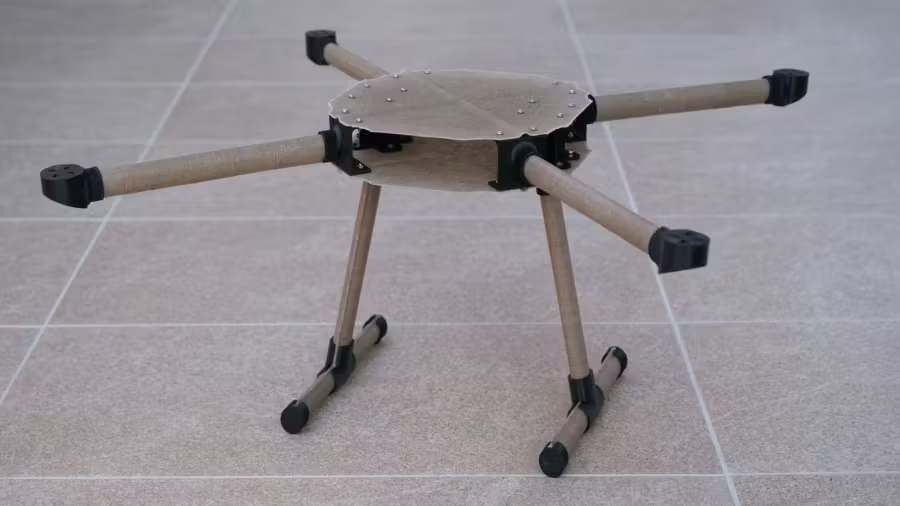
Unmanned aerial systems (UAS), commonly known as drones, are evolving at a rapid pace. From defense and industrial inspections to agriculture and research, modern drones must be lighter, stronger, and more reliable than ever before. At the heart of this evolution is one critical material innovation: composites for drones.
Composite materials have reshaped how drones are designed and manufactured. By combining high-performance fibers with advanced resins, engineers can create structures that outperform traditional metals in weight, strength, and flexibility. As drone missions become more complex, composites are no longer optional—they are essential.
What Are Composites for Drones?
Composites for drones are engineered materials made by combining two or more distinct components, typically a reinforcement fiber and a matrix resin. Common fibers include carbon fiber, fiberglass, and aramid, while resins may be epoxy, polyester, or thermoplastic-based.
This combination allows designers to tailor material properties for specific drone applications. Instead of relying on one uniform material, composites can be optimized for stiffness, impact resistance, vibration damping, or thermal stability.
Why Composites Matter in Drone Design
The performance demands placed on drones are unlike those of many other vehicles. Every gram of weight affects flight time, stability, and payload capacity. Composites for drones directly address these challenges.
Weight Reduction
Lightweight structures improve:
- Flight endurance
- Maneuverability
- Energy efficiency
Compared to aluminum or steel, composite materials offer superior strength-to-weight ratios, allowing drones to carry more equipment without sacrificing performance.
Structural Strength and Durability
Drones often operate in harsh environments, including high winds, temperature extremes, and rough landings. Composite structures provide:
- High tensile strength
- Resistance to fatigue and cracking
- Long service life
These properties are especially important for industrial and military UAS platforms.
Design Flexibility and Aerodynamics
One of the most overlooked benefits of composites for drones is design freedom. Unlike metals, composites can be molded into complex aerodynamic shapes without added weight or joints.
This enables:
- Streamlined airframes
- Integrated components
- Reduced drag and noise
Improved aerodynamics translate directly into better flight efficiency and control.
Applications of Composites in Drone Systems
Composite materials are used throughout modern drone platforms, not just in airframes.
Airframes and Fuselages
The primary structure of most high-performance drones is built from composite laminates to ensure rigidity and low mass.
Propellers and Rotors
Composite propellers offer:
- Reduced vibration
- Higher fatigue resistance
- Improved thrust efficiency
These advantages lead to smoother operation and longer component life.
Payload and Sensor Housings
Sensitive electronics benefit from composite enclosures that provide protection while minimizing added weight.
Manufacturing Considerations
Producing high-quality composites for drones requires specialized expertise and precise manufacturing processes. Factors such as fiber orientation, resin selection, and curing methods directly influence performance.
Advanced composite manufacturers focus on:
- Consistent material quality
- Repeatable production processes
- Scalable solutions for different drone sizes
Companies specializing in UAS materials and systems, such as Makobond, contribute to this space by supporting the development of advanced composite solutions for drone and aerospace applications.
Future Trends in Composites for Drones
As drone usage expands, composite technology continues to advance. Emerging trends include:
- Thermoplastic composites for faster production
- Hybrid fiber systems for balanced performance
- Improved recyclability and sustainability
These innovations will further enhance drone capabilities while addressing cost and environmental concerns.
Why Composites Will Continue to Dominate the Drone Industry
The drone industry demands materials that balance performance, reliability, and efficiency. Composites for drones meet these requirements better than any traditional alternative. As missions grow more demanding and regulations more stringent, composite materials will remain central to drone innovation.
Manufacturers and operators alike benefit from lighter structures, longer service life, and improved flight characteristics—all driven by advanced composite engineering.
Conclusion
The rapid advancement of drone technology would not be possible without the continued development of composites for drones. These materials have redefined what unmanned aerial systems can achieve, from longer flight times to greater payload capacity and enhanced durability.
As research and manufacturing techniques improve, composites will play an even greater role in shaping the future of drones across commercial, industrial, and defense sectors. For those exploring advanced UAS material solutions, composite-focused platforms like https://www.makobond.com/drones-uas provide valuable insight into this evolving field.